
True Crime, Interrupted
Six True Crime Cases That Took an Unexpected Turn

True crime has a familiar rhythm.
A person disappears.
Violence escalates.
The worst outcome arrives.
Most of the stories that stay with us follow that arc—not because it’s inevitable, but because it’s what we’re used to seeing. We learn the patterns. We recognize the warning signs. We brace ourselves for the ending.
But every so often, a case veers off course.
Not because the danger wasn’t real, and not because the harm disappears—but because something intervenes. A survivor makes an impossible decision. A stranger pays attention. A crowd refuses to disperse. A family forces a system to confront its own delay. A group of witnesses holds the story together long enough for help to arrive.
These cases are heartening in a particular way. They don’t deny how close the harm came, and they don’t promise that vigilance guarantees safety. What they show, instead, is that even in situations shaped by violence, control, or indifference, human presence can still matter.
This article looks at six true crime cases from 2025 where the expected trajectory was disrupted. They are not “good news” stories, and they are not meant to offer comfort. But they do offer something quieter and harder to dismiss: evidence that the worst outcome is not always inevitable—and that moments of attention, resistance, or refusal can still change how a story ends.
Case One: The Fire He Lit to Save Himself
(Waterbury, Connecticut, February 17, 2025)
True crime fans know the moment I’m talking about, the part of the story that makes you put your phone down for a second and stare at the wall.
Not because it’s gory.
Because it’s human.
On February 17, 2025, firefighters responded to a house fire on Blake Street in Waterbury, Connecticut. One adult homeowner escaped on her own. A second person, her adult stepson, had to be assisted out of the house by firefighters, suffering from smoke inhalation and exposure.
And then came the sentence that instantly reclassified the call.
The man told first responders he set the fire on purpose because he wanted his freedom.
The captivity behind the fire
According to police affidavits and early court filings, the man, now 32 years old, alleged that he had been held captive inside the home for more than 20 years, beginning when he was around 11 years old. He was reportedly removed from school in the fourth grade and gradually cut off from the outside world.
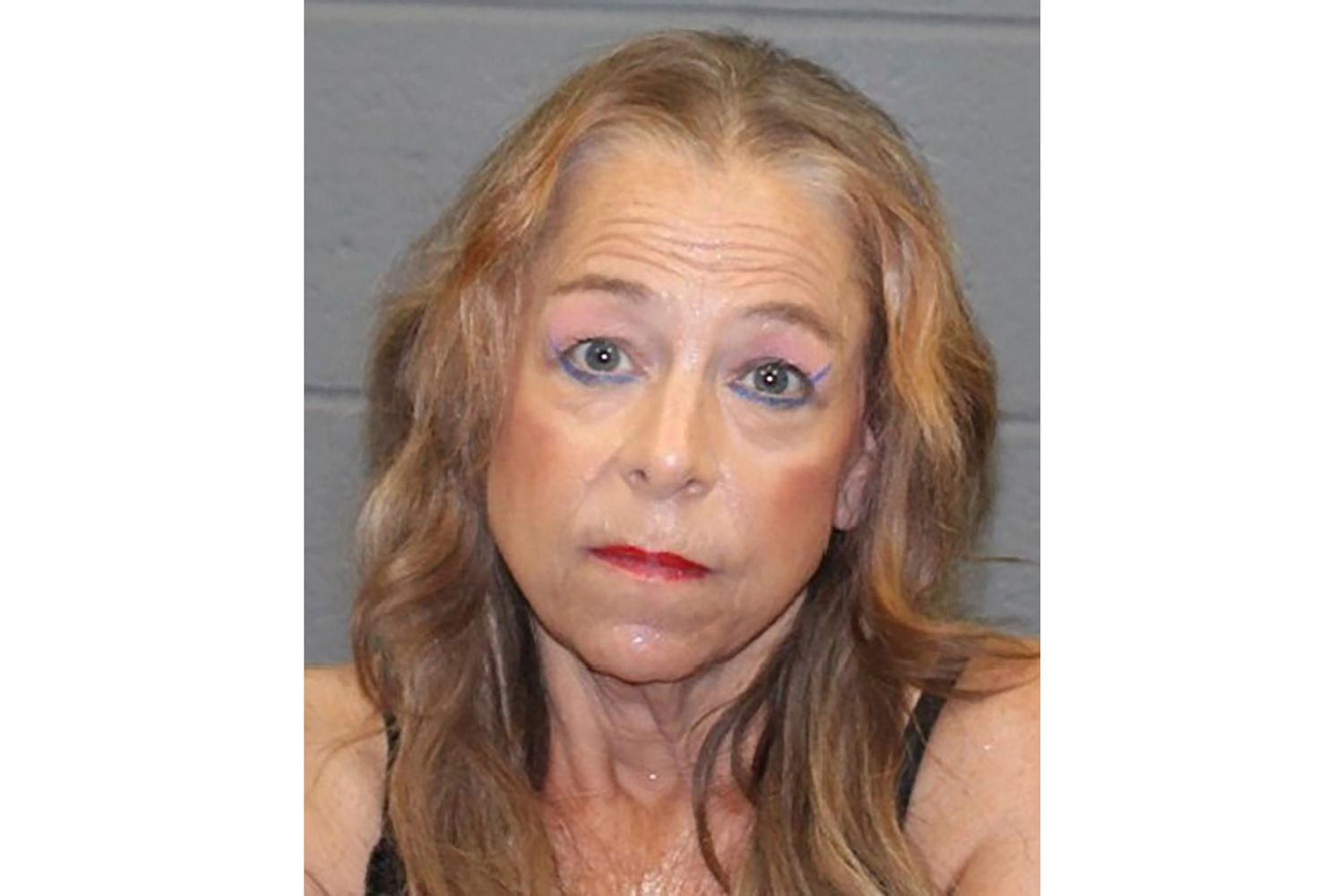
Kimberly Sullivan
The person accused of holding him captive is his stepmother, Kimberly Sullivan, who had primary control over the household. Court records indicate that the man’s biological mother relinquished custody when he was an infant, giving up parental rights when he was approximately six months old. Family members later told reporters she attempted to locate him over the years but had no legal access once custody was terminated.
His father was intermittently present early on, according to investigators, but was not consistently living in the home for much of the alleged captivity. He later died in January 2024, roughly one month before the fire. By that point, police say, Sullivan was the sole adult exercising day-to-day control over the victim’s environment.
Prosecutors have not pointed to a single inciting incident or clear motive. Instead, they describe a long-term pattern of deprivation, isolation, and control, the kind of abuse that persists not because it is loud, but because it is hidden. Child welfare agencies had contact with the family years earlier, but no substantiated findings were made at the time.
When firefighters pulled him from the house, the man was 5’9” and weighed approximately 68 pounds.
The escape plan that wasn’t an escape plan
The man later told police that he started the fire using printer paper and hand sanitizer, while locked inside a room from the outside, fully aware that the fire could kill him.
That detail matters.
This was not an escape attempt in the conventional sense. There was no unlocked door, no safe place waiting, no realistic chance of running and disappearing. This was a decision made inside a reality where almost every other option had already been eliminated.
What he appears to have understood, clearly and correctly, is this:
Fire forces a response.
Firefighters cannot ignore smoke.
They cannot negotiate from outside the house.
They cannot leave without entering.
Even if the fire killed him, it would still accomplish something critical. It would bring witnesses into the home and collapse the privacy that had sustained the alleged abuse.
This was not impulsive.
It was forced-choice problem-solving under extreme constraints.
What survival intelligence actually looks like
In forensic psychology, we often talk about learned helplessness, how people subjected to chronic control narrow their behavior, suppress resistance, and focus on survival rather than escape.
But this case highlights something equally important. Agency does not disappear under captivity. It goes quiet.
For years, survival may have meant compliance, invisibility, endurance. When the opportunity finally appeared, however dangerous, the decision was not reckless. It was calculated.
This was not “fight or flight” as it is often packaged online. It was risk selection:
Fire guarantees an emergency response.
Emergency response brings outsiders inside the home.
Outsiders disrupt narrative control.
Once the story leaves the house, it cannot be contained.
He didn’t choose a good option.
He decided the only option was to make continued confinement impossible.
What was visible and what wasn’t
After the arrest, neighbors expressed shock, and some recalled moments that, in hindsight, felt unsettling. One described seeing what looked like a young boy waving from a window years earlier.
These details linger not because they solve the case, but because they expose something uncomfortable. Extreme suffering can coexist with ordinary life without registering clearly enough to force intervention.
That tension, between what is visible and what is understood, is one of the reasons these cases stay with us.
Reclaiming the narrative
In April 2025, the survivor released a public statement through a spokesperson, identifying himself only as “S.” He said he was choosing a new name as part of reclaiming control over his life and how his story would be told.
That choice matters.
True crime can unintentionally strip agency twice, first through the crime itself, and again through the way stories are packaged, reduced to headlines, and flattened into shock.
S made it clear he wanted a voice.
That, too, is survival.
A predatory system collapsed, not because of investigative brilliance, but because the person being controlled forced the outside world to respond.
Three things failed at once:
Privacy
Plausibility
Silence
Long-term abuse depends on all three.
He didn’t escape through a door.
He escaped through attention.
And in true crime, attention is often the one thing predators cannot survive.
Case 2: The Note She Slipped in the Bathroom
(Cedar City, Utah — March 2025)
The setup is deceptively ordinary.
A couple on the road.
A routine stop.
A woman who does not run, does not scream, does not make a scene.
Not because she does not want to.
Because she knows exactly who she is with.
In March 2025, police in Cedar City, Utah, stopped a white SUV traveling north on Interstate 15, just miles after it left a gas station. Inside the vehicle was a woman who told officers she had been held against her will by her partner and believed she would not survive the drive if she did not get help when she did.
Police were already looking for the vehicle for a simple reason.
A stranger had handed dispatch a crumpled note, written in a women’s restroom.
It read, in part:
“Help me. He has my phone. White Equinox. Please call the police.”
The context most coverage skips
According to police statements and court filings, the woman and the man she was traveling with were intimate partners in a long-term relationship marked by coercive control and domestic abuse. Friends later told reporters that she had tried to leave before, and that attempts to resist or escape were typically met with escalation rather than freedom.
By the time they stopped at the gas station, the woman’s phone had been taken, her movements were monitored, and she was being driven along a remote stretch of highway where screaming or bolting would have been both visible and dangerous.
This was not a stranger abduction.
It was the far more common, and far more lethal, scenario: a known partner, a moving vehicle, and isolation.
That context explains why what happened next was not hesitation.
It was strategy.
The choice point no one sees on camera.
Inside the gas station, the man accompanied her to the counter but did not follow her into the women’s restroom.
That was the opening.
She did not try to flee.
She did not confront him.
She did not risk alerting him prematurely.
Instead, she wrote.
The note was brief, shaky, and direct. It included what mattered most, the vehicle description. She slipped it to another woman in the restroom, someone who could leave safely without raising suspicion.
That moment, the decision to pass information rather than seek immediate rescue, is where cases like this often hinge.
Because if the bystander hesitates, the window closes.
The second decision that saved her life
The woman who received the note did not dismiss it as a misunderstanding or a relationship dispute. She did not hand it to a clerk and walk away. She called 911 immediately, stayed on the line, and followed the SUV at a safe distance after it left the station.
That detail matters.
Domestic violence experts often note that escape fails not because victims do not ask for help, but because helpers do not know what to do next.
This bystander did.
She relayed the license plate, direction of travel, and updates in real time. Police intercepted the vehicle within minutes, before it could disappear into a longer stretch of highway.
The woman was removed safely.
The man was arrested.
Survival intelligence under coercive control
From a forensic psychology standpoint, it is a clear example of situational intelligence rather than fearlessness.
People often ask why victims do not “just run.”
In coercive control dynamics, the risk calculus is different. Resistance that fails does not reset the situation. It worsens it.
What this woman did instead was recognize three realities:
She had a limited, temporary opening.
She needed a third party who could act without being seen.
Information was more valuable than confrontation.
This was not passivity.
It was resource management under threat.
She used the safest available tool, anonymous disclosure, and paired it with a helper willing to assume responsibility.
This case does not end with a dramatic chase or a courtroom twist. It ends quietly, on the side of a highway, with a woman stepping out of a vehicle she believed she might not survive.
What makes it remarkable is not luck.
It is alignment.
A victim who recognized her constraints.
A bystander who trusted her instincts.
A system that responded quickly because it had usable information.
She did not escape by overpowering her abuser.
She escaped by outsourcing visibility.
She didn’t escape by overpowering her abuser.
She escaped by finding someone who could act when she could not.
Case 3: The Crowd That Refused to Freeze
(Jacksonville, Florida — March 12, 2025)
A parking lot.
Daylight.
People close enough to see what was happening, and far enough away to pretend it wasn’t.
In March 2025, outside a Florida Department of Motor Vehicles office in Jacksonville, a woman was seen clinging to the side of a moving SUV, screaming as the driver attempted to pull away. Inside the vehicle were her two young children, one a toddler, the other an infant.
What made this moment especially dangerous was not just the violence.
It was the speed.
Abductions succeed not because they are subtle, but because they are fast. A vehicle in motion collapses the window for intervention to seconds.
This one did not.
The context that explains the chaos
According to police statements and witness interviews, the man attempting to drive away was known to the woman, not a stranger acting at random. The encounter escalated during a confrontation in the parking lot, with the man entering the vehicle and attempting to leave with the children still inside, against the mother’s will.
That distinction matters.
Parental or quasi-parental abductions account for the majority of child kidnappings, and witnesses often misread them as domestic disputes rather than imminent danger. That misinterpretation is one of the most common reasons bystanders hesitate.
But what witnesses saw here did not look ambiguous.
The woman was being dragged.
The children were crying.
The vehicle was moving.
This was no longer a dispute.
It was a countdown.
The moment everything could have gone wrong
This is where cases like this usually turn irreversible.
A crowd forms.
People shout.
Phones come out.
And then nothing happens.
That is the classic bystander effect, responsibility diffused across a group large enough for everyone to wait.
In this parking lot, something different occurred.
Instead of stepping back, people stepped in.
What collective interruption looks like in real time
More than a dozen bystanders converged on the SUV almost simultaneously.
Some grabbed the doors.
Some pulled the mother away from the vehicle.
Others focused on the children, opening doors, lifting them out, moving them backward toward safety.
No single person took charge. There was no shouted command and no obvious leader. Roles emerged organically.
One group focused on the mother.
Another focused on the children.
Others positioned themselves around the vehicle to prevent forward movement.
This kind of rapid role differentiation is rare under stress and devastating to a plan that depends on confusion.
Within moments, the children were out of the vehicle.
The mother was no longer being dragged.
The SUV could no longer leave.
Police arrived shortly afterward and took the man into custody.
No child disappeared.
No one was killed.
Why this worked when so many others do not
From a forensic psychology standpoint, this case is a near-perfect illustration of collective efficacy, the opposite of the bystander effect.
Several factors aligned.
First, the threat was unmistakable. This did not look like an argument. It looked like a loss of control.
Second, the victims were visibly vulnerable. Infants eliminate plausible deniability.
Third, movement toward danger became contagious. Once one person stepped forward, others followed.
Predatory behavior, especially in abduction attempts, relies on hesitation. Even a five-second delay can be enough for a vehicle to disappear.
Here, hesitation never took hold.
The detail that matters most
In later interviews, witnesses did not describe feeling brave.
They described feeling unable not to act.
That distinction matters.
Hero narratives suggest extraordinary people doing extraordinary things. This case suggests something quieter and more unsettling.
When ambiguity collapses, ordinary people are capable of rapid, coordinated intervention.
This story does not end with a trial twist or a sentencing headline. It ends in a parking lot where a crime failed mid-act.
Abductions do not depend on force alone.
They depend on silence, speed, and social paralysis.
In Jacksonville, all three failed.
The crowd did not wait.
They did not defer.
They did not freeze.
They moved.
And sometimes, movement is enough to keep a crime from finishing what it started.
Case 4: When Protection Was Only on Paper
(Illinois — February 2025)
A woman leaves.
The danger escalates.
The system responds on paper.
And then something crucial does not happen.
In April 2023, Karina Gonzalez obtained an order of protection against her estranged husband in Illinois. A judge revoked his Firearm Owner’s Identification card, legally prohibiting him from possessing a gun.
Two weeks later, Karina and her 15-year-old daughter, Daniela, were shot and killed.
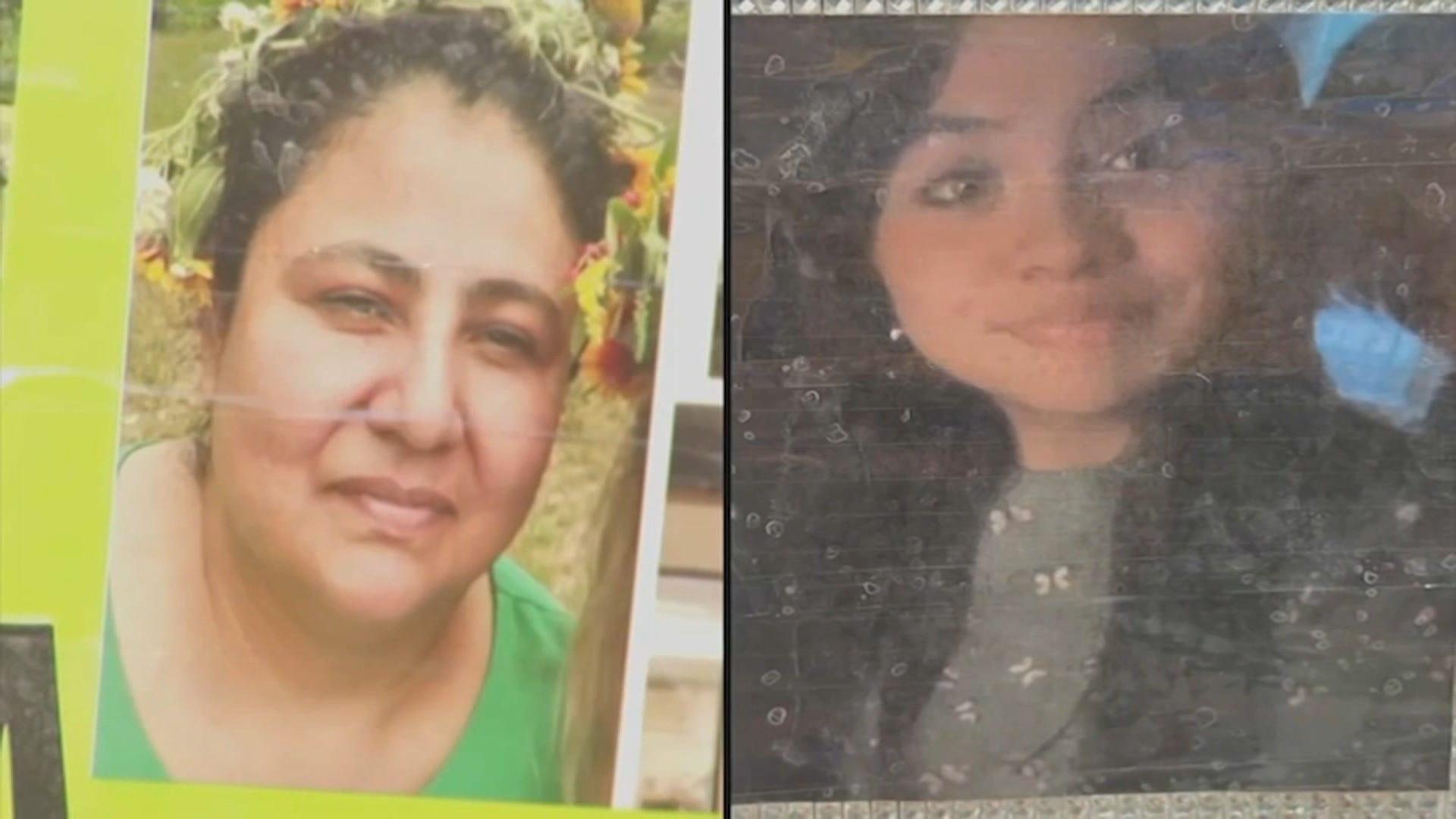
murdered mother and daughter, Karina and Daniela Gonzalez
The firearm had never been removed.
The failure point that mattered
At the time of Karina’s death, Illinois law allowed courts to revoke a FOID card following an emergency restraining order, but did not require law enforcement to physically seize firearms within a defined time frame.
In other words, the system recognized the danger.
It just did not act fast enough to neutralize it.
That distinction, between recognition and interruption, is where this case belongs.
Not because of what happened in 2023.
But because of what changed in February 2025.
The context behind the law
After the murders, Karina’s surviving son, Manny Alvarez, stepped into a role no one should have to occupy. He did not grieve privately. He studied the gap that killed his mother and sister.
What he found was disturbingly simple.
A revoked FOID card creates a legal prohibition, not physical safety. It assumes voluntary compliance from someone already identified as dangerous.
That assumption is one of the most persistent and lethal errors in domestic violence policy.
With Manny’s advocacy, Illinois lawmakers drafted Karina’s Law, which was signed in February 2025. The law now requires law enforcement to seize firearms within 96 hours of a FOID revocation tied to an emergency restraining order.
It closed the gap between knowing and doing.
Why timing matters in post-separation violence
From a forensic psychology standpoint, Karina’s case sits squarely in what researchers call the severance window, the period immediately following separation when the risk of lethal violence increases dramatically.
This is not a mystery to professionals.
Separation threatens control.
Restraining orders escalate the grievance.
Firearms multiply lethality.
What is less often acknowledged is how administrative delay functions as an opportunity.
When a court revokes a FOID card but leaves the weapon in the home, it sends a dangerous message, not to the victim, but to the offender.
They know I am dangerous. And they still have not stopped me.
That gap is not neutral.
It is interpreted.
What this case reveals
Unlike the other cases in this series, this one does not hinge on a split-second decision or a moment of physical intervention.
Its interruption came later.
But the mechanism is the same.
Where others forced attention, visibility, or action in the moment, this case shows what happens when interruption fails, and how families sometimes become the force that corrects it afterward.
This is not heroism in the cinematic sense.
It is persistence aimed at a particular failure point.
What cannot be dismissed
Karina Gonzalez did not ignore warning signs.
She did not stay silent.
She did not avoid the system.
She did precisely what victims are told to do.
That is what makes this case so unsettling.
Many tragedies are not caused by ignorance. They are caused by assumptions.
That paperwork equals safety.
That compliance equals disarmament.
That time does not matter.
Karina’s Law rejects those assumptions.
There is no version of this story in which the word ‘hope’ feels comfortable.
But there is something honest.
After the murders, the system was forced to admit a hard truth.
Recognition without action is not protection.
Karina’s Law did not restore what was lost.
It narrowed the danger window for the next person.
Karina Gonzalez did not survive the severance window.
But her name now marks the place where the system is no longer allowed to hesitate.
Case 5: The Father Who Didn’t Wait
(Houston-area suburb, Texas — December 25, 2025)
A child disappears.
Police are notified.
Searches expand outward in widening circles, hours passing, then days.
This one unfolded differently.
On Christmas Day 2025, a 15-year-old girl was abducted at knifepoint while walking her dog in a Houston-area suburb. The man who took her forced her into a pickup truck and drove away.
Within minutes, her father realized she was gone.
Instead of waiting for the system to catch up, he acted.
The context that explains the urgency
According to police reports, the abductor was not a stranger pulled from nowhere, but a man who had been observed in the neighborhood before. The victim had her cell phone with her when she was taken, a detail that would become critical.
When the father learned his daughter had not returned, he did not stop at calling the police. He accessed parental tracking software already installed on her phone.
The signal was active.
It showed her location moving.
That detail changes everything.
Once a child is mobile in a vehicle, the odds shift rapidly. Distance accumulates. Jurisdictional lines appear. Delay compounds.
The first hour matters more than the next twenty-three combined.
The decision point most people never see
Law enforcement was notified and began responding. The father did not stay home refreshing his phone.
He got in his car.
The tracking signal led him to a secluded, wooded area several miles away. When he arrived, he saw the pickup truck and his daughter inside.
What happened next was not cinematic.
There was no chase.
No negotiation.
No heroic speech.
There was an interruption.
The father confronted the situation, creating enough disruption for his daughter to escape from the vehicle. Police arrived shortly afterward and took the suspect into custody.
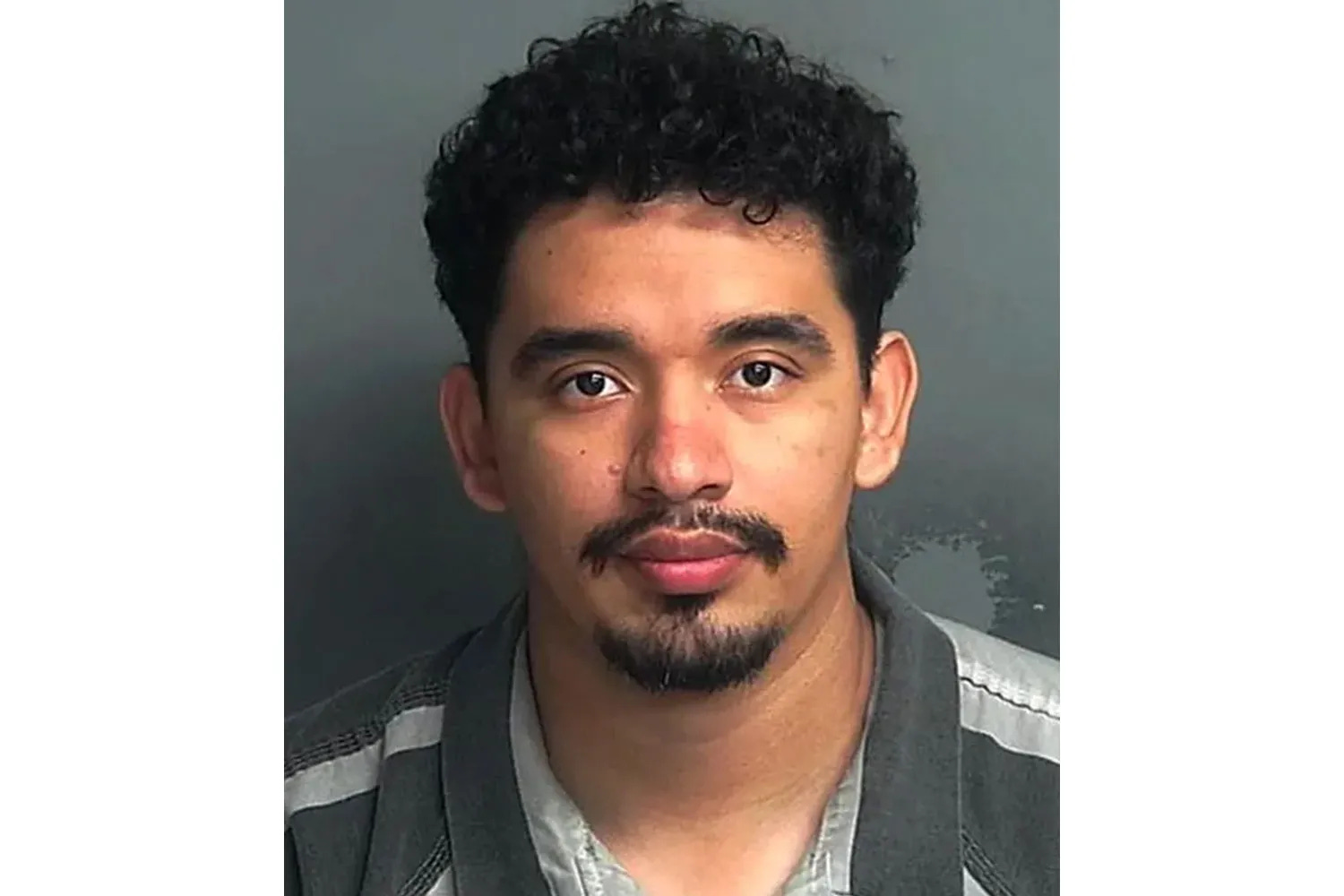
arrested abductor Giovanni Rosales Espinoza
The abduction ended not because a perimeter closed, but because a parent collapsed the timeline.
Why this worked when waiting so often does not.
From a forensic psychology standpoint, this case illustrates something rarely discussed outside training rooms. Offenders rely on delay.
Abduction plans, especially those involving children, often assume:
Families will wait for instructions.
Law enforcement response will be procedural.
Time will widen the offender’s options.
In this case, that assumption failed.
The father did not override the police.
He did not replace them.
He used information faster than the system could.
This was not recklessness. It was a matter of temporal attunement, recognizing that the risk of waiting outweighed the risk of acting.
The detail that matters most
Afterward, the father did not describe himself as brave. He described himself as unable to sit still while his daughter’s location updated in real time.
That detail matters.
Parental intervention is often framed as emotional or impulsive. This was neither. It was data-driven urgency paired with instinct.
He did not chase a hunch.
He followed a signal.
This case does not end with a press conference or a long trial summary. It ends with a teenager alive on Christmas Day because one assumption was not followed.
The assumption that nothing meaningful can be done until the system arrives.
Karina’s Law showed what happens when delay proves fatal.
This case shows what happens when a delay is refused.
The contrast is intentional.
Because violent crime does not just depend on what perpetrators do.
It depends on what they expect others will not do.
In this case, the expectation was passivity.
The father did not comply with that expectation.
He did not wait for permission.
He did not wait for certainty.
He did not wait at all.
Case 6: The Case No One Solved Alone
(Kent, Washington — March 2025)
In many true crime stories, the focus falls on a single figure.
The one who ran.
The one who fought.
The one who pulled someone free at the last second.
This case has none of that.
And that is precisely why it matters.
In March 2025, multiple witnesses in Kent, Washington, saw a young woman being forced into a car in a public area. She struggled. She screamed. The man pulling her into the vehicle was larger and faster.
No one managed to physically stop him.
The car drove away.
And yet, this was not the beginning of a disappearance.
The context that explains why this usually fails
Abductions that move quickly into vehicles are among the hardest crimes to interrupt. Once the car is gone, witnesses are left with fragments, a blur of motion, partial descriptions, and uncertainty about what they actually saw.
That uncertainty is what predators count on.
In most cases, bystanders hesitate just long enough for the trail to cool, especially when they feel powerless to physically intervene.
That did not happen here.
What the witnesses did instead
As the vehicle pulled away, something unusual occurred.
The witnesses did not scatter.
They did not assume someone else had called the police.
They did not argue about what to do.
They divided the task.
One person immediately called 911.
Another memorized the license plate.
Others tracked the direction of travel, noting turns and landmarks.
One stayed with the dispatcher, relaying updates in real time.
No one chased the car.
No one played hero.
They turned a chaotic moment into usable information.
Why this worked when physical intervention did not
Police located the vehicle within minutes. The woman was rescued alive.
From a forensic psychology standpoint, this case is a clear example of distributed responsibility, a rare reversal of the bystander effect.
Instead of freezing because no single person could do everything, each witness did one manageable thing.
That distinction matters.
The bystander effect is not about apathy. It is about cognitive overload, too many possible actions, none of them clearly the right one.
Here, the witnesses solved that problem collectively.
They did not ask, “What should I do?”
They asked, “What can I do right now?”
The detail that makes this case exceptional
In interviews, none of the witnesses described themselves as brave.
They described the moment as automatic, almost procedural.
That is unusual.
Most people believe intervention requires confrontation. This case shows something quieter and far more accessible.
Intervention can be information.
Predatory crimes rely not just on force, but on the collapse of clarity. When witnesses preserve clarity, accurate details, rapid communication, and continuity, the offender’s advantage disappears.
This case closes the series without spectacle.
No single hero.
No dramatic rescue.
No new law bearing a victim’s name.
Just people who refused to disengage when disengagement would have been easier.
Across these six cases, interruption took many forms.
A survivor creating a crisis to force attention.
A woman signaling quietly for help.
A crowd that moved before hesitation could settle.
A family that closed a lethal gap the system left open.
A father who refused the delay that abduction depends on.
And here, finally:
A community that did not disengage.
True crime often ends with the question, “How did no one stop this?”
Kent offers a different answer.
Sometimes, no one stops it alone.
Sometimes, the crime fails because everyone does a small part at the same time.
True crime teaches us how harm happens.
These cases remind us that sometimes, it doesn’t.
References
Case 1: The Fire He Lit to Save Himself (Waterbury, Connecticut)
ABC News. (2025, April 16). Connecticut man allegedly held captive for over 20 years releases first public statement.
https://abcnews.go.com/US/connecticut-man-allegedly-held-captive-20-years-release-statement/story?id=120834532
CBS News. (2025, March 14). A man says he was held captive for more than 20 years by his stepmother in Connecticut.
https://www.cbsnews.com/news/man-captive-20-years-connecticut-details-stepmother-kimberly-sullivan/
Case 2: The Note She Slipped in the Bathroom (Cedar City, Utah)
KUTV. (2025, March 10). Man accused of kidnapping after the victim slips a witness note at the Cedar City gas station.
https://kutv.com/news/local/man-acused-of-kidnapping-after-victim-slips-witness-note-at-cedar-city-gas-station-arrested
FOX 29. (2025, March 12). Alleged kidnapping attempt thwarted after the victim slipped a witness an SOS note at a Utah gas station.
https://www.fox29.com/news/alleged-kidnapping-attempt-thwarted-after-victim-slipped-witness-sos-note-utah-gas-station
Case 3: Bystander Intervention at the Jacksonville DMV (Jacksonville, Florida)
First Coast News. (2025, April 24). Bystanders help stop suspect accused of dragging woman while attempting to drive off with children.
https://www.firstcoastnews.com/article/news/local/jacksonville-dmv-incident-woman-children/77-196db7f4-7c2d-4c7f-820b-f03faf3bc7d9
FOX 13 Tampa Bay. (2025, April 24). Video shows Florida man dragging woman as he tries to drive off with two children.
https://www.fox13news.com/news/video-florida-man-caught-camera-dragging-woman-he-tries-driving-off-2-kids
ABC7. (2025, April 25). Terrifying moment bystanders save mother and children from kidnapping caught on camera in Jacksonville.
https://abc7.com/post/terrifying-moment-bystanders-save-mother-children-kidnapping-caught-camera-jacksonville-florida/16246780/
Case 4: Karina’s Law (Illinois)
Office of Governor JB Pritzker. (2025, February 10). Governor Pritzker signs Karina’s Law.
https://gov-pritzker-newsroom.prezly.com/gov-pritzker-signs-karinas-law
WTTW News. (2025, February 10). Pritzker signs Karina’s Law to remove guns in domestic violence cases.
https://news.wttw.com/2025/02/10/pritzker-signs-karina-s-law-remove-guns-domestic-violence-situations
ABC7 Chicago. (2025, February 10). Illinois governor signs Karina’s Law aimed at removing guns in domestic violence situations.
https://abc7chicago.com/post/illinois-governor-jb-pritzker-sign-karinas-bill-remove-guns-domestic-violence-situations-little-village-mom/15888858/
Case 5: The Father Who Didn’t Wait (Houston-area suburb, Texas)
People. (2025, December). Father rescues kidnapped 15-year-old daughter by tracking her phone location.
https://people.com/texas-father-finds-kidnapped-daughter-by-tracking-her-phone-location-11876663
CBS News. (2025, December). Texas father uses cellphone data to rescue daughter after she was kidnapped at knifepoint.
https://www.cbsnews.com/news/texas-dad-cell-phone-data-rescue-daughter-knifepoint-police/
The Guardian. (2025, December 28). Texas father rescues kidnapped daughter after tracking her phone.
https://www.theguardian.com/us-news/2025/dec/28/texas-father-rescues-kidnapped-daughter-tracking-phone
Case 6: The Kent Witness Network (Kent, Washington)
KIRO 7 News. (2025, March 18). Kent police credit witnesses with saving woman from kidnapping.
https://www.kiro7.com/news/local/kent-police-credit-witnesses-with-saving-woman-kidnapping/PYQIGKOO5FGU5J7R6NNBMC4ZTA/
FOX 13 Seattle. (2025, March 18). Man arrested for kidnapping and assault in Kent.
https://www.fox13seattle.com/news/man-arrested-kidnapping-assault-kent
Kent Reporter. (2025, March 18). Kent police arrest man for allegedly kidnapping girlfriend.
https://www.kentreporter.com/news/kent-police-arrest-man-for-allegedly-kidnapping-girlfriend/
Happy New Year to my wonderful readers. Please pass this newsletter along to your true-crime-following friends.
Exceptional article. ( I have made it into your website.) Very enjoyable and informative.