
The First Kill
Which Juvenile Killers will Kill Again?

In January 2026, investigators in western New York announced they had finally closed a 49-year-old cold case. The victim was Beatrice Meabon, a woman found stabbed inside her home in Brant, New York, in July 1976. Her death had been labeled “suspicious,” but no arrest was ever made. The case file gathered dust for nearly half a century.
The man who confessed to her murder was already behind bars, serving 40 years to life for killing two other women. His name was Richard Fox. And Beatrice Meabon was his grandmother.

sixty-two year old Richard J. Fox
Fox was 13 years old when he stabbed her to death.
When investigators from the Chautauqua County Sheriff’s Office and Brant Police Department confronted Fox with what they had uncovered, he confessed. But he couldn’t, or wouldn’t, explain why. According to Captain Jacob Stahley, one of the lead investigators, Fox “couldn’t give a good reason” and “had trouble recalling” the details of that summer day back in 1976.
Here is what we know: A neighbor found Meabon lying on the floor of her home, suffering from stab wounds to her chest. She was rushed to the hospital but died of her injuries. Her 13-year-old grandson had been at her house that day. No leads. No witnesses. No arrest.

Beatrice Mabon’s 1938 high school photo
And the case went cold. For 49 years, no one connected Richard Fox to his grandmother’s violent death.
That connection only emerged because Fox couldn’t stop killing.
In September 2021, hikers discovered skeletal remains in a wooded area along the Chautauqua Rails to Trails path in Portland, New York, not far from where Fox grew up. The remains belonged to two women: 40-year-old Cassandra Watson and 50-year-old Marquita Mull.

Watson had been killed sometime around 2003 or 2004; her remains weren’t identified until late 2024. Mull was killed in June 2021, just months before the grim discovery. Fox had been in a relationship with Watson. He knew both women.In September 2025, Fox pleaded guilty to both murders and was sentenced to 40 years to life.
But investigators weren’t done. Fox now faces additional charges in the 2023 murder of Crystal Curthoys, a 32-year-old Lockport woman whose remains were reportedly found hidden beneath a basement staircase in a Niagara Falls home where Fox had lived. And, as they dug into his past, they stumbled onto the long-forgotten case of Beatrice Meabon, and realized her grandson had been there the day she died.
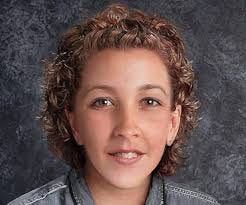
32-year old Crystal Curthoys
Despite his guilt, Richard Fox will never be prosecuted for his grandmother’s murder. Under the laws in effect in 1976, a 13-year-old could not be charged as an adult for any crime, including murder. (New York changed that law in 1978, lowering the threshold to age 13). Fox dodged accountability by two years.
But the legal loophole isn’t the real story here. The real story is what happened, or rather, what didn’t happen, between 1976 and Fox’s next known victim.
Richard Fox didn’t go dormant after killing his grandmother. He escalated.
In 1993, Fox was convicted of raping a 14-year-old girl. Court records reveal the crime was part of an 11-year pattern of sexual abuse that began when the victim was just three years old. He served approximately 204 days in jail followed by three years and five months in state prison. He was released on April 29, 1997.
Cassandra Watson, his girlfriend, disappeared sometime between 2003 and 2004.
Then, in March 2005, Fox attacked a 42-year-old woman he knew, someone he had lived with. He was convicted of attempted rape and aggravated sexual abuse and sent back to prison.
The pattern isn’t one of cooling off. It’s one of violence interrupted by incarceration and resumed upon release.
Sheriff James Quattrone has publicly stated that investigators believe there may be two or three additional unsolved homicides connected to Fox. The Rails to Trails site where Watson and Mull were found is wooded and isolated, exactly the kind of location a killer might return to repeatedly over years. If Fox used that trail as a dumping ground once, he may have used it before.
Every known victim shares a common thread: Fox had intimate access to them. His grandmother. A child he abused for over a decade. His girlfriend. A woman he lived with. Another woman he lived with. The pattern isn’t stranger predation. It’s betrayal of trust, repeated across five decades.
Which brings us to the question that cases like Richard Fox force us to ask about every juvenile who commits homicide:
If Fox had been identified in 1976, could we have predicted he would kill again?
A 13-year-old who stabs his grandmother to death is not a typical juvenile delinquent. But he’s also not automatically destined to become a serial killer. Most juveniles who commit homicide, even violent, disturbing homicide, do not go on to kill again. The recidivism rate for juvenile homicide offenders, while higher than we’d like, is not 100 percent. It’s not even close.
So what separates the Richard Foxes from the juveniles who kill once and never again? What warning signs, what risk factors, what psychological markers distinguish the one-time offender from the serial predator in the making?
The answer matters. Because if we can identify those markers, we have a chance to intervene, not after the second victim, or the third, or the fourth, but before. And if we can’t, we need to understand why the system keeps failing.
Richard Fox killed at 13 and wasn’t caught. Edmund Kemper killed at 15, was institutionalized for six years, and was released to kill eight more.
Peter Lundin killed at 19, served eight years, and was released to kill three more.

fifty-three year old Peter Lundin (this photo was taken around 2001)
The system had a chance with Kemper and Lundin. It had no chance with Fox because no one knew.
But what if someone had known? What if investigators in 1976 had identified that 13-year-old boy as his grandmother’s killer? Would anything in his profile have told them what he would become?
Let’s see what we can find out.
Separating Fact fom Fiction
The vast majority of juvenile homicide offenders will never kill again. But some will, and the challenge for researchers, forensic clinicians, and policymakers is figuring out which ones. No one wants to be wrong.
Before we examine the data, we need to know exactly what we’re measuring. “Recidivism” is a slippery term. In different studies, it may mean a rearrest for any offense, including a parole violation or failed drug test. It can mean reconviction, where the person was actually found guilty of a new crime. It can mean reincarceration, being sent back to prison.
It can also mean commission of a new violent offense, including a murder. These are vastly different outcomes. A juvenile murderer who gets arrested for marijuana possession ten years after release is clearly not the danger as the one who kills again.
The Landmark Longitudinal Study
The most rigorous long-term research on juvenile homicide offenders (JHOs) in the United States comes from Kathleen Heide and Norair Khachatryan at the University of South Florida. They tracked 59 males who were convicted of murder or attempted murder as juveniles in the early 1980s and sentenced to adult prison. Thirty years later, here’s what they found:
Of the 48 offenders who had been released from prison, 42 (88%) were rearrested for some offense during the follow-up period. That sounds alarming, but rearrest includes everything from traffic violations to new felonies.
More meaningful: 30 of the 48 released offenders (63%) were arrested for a new violent crime. This is a narrower category that excludes property crimes, drug offenses, and technical violations.
Most meaningful: 5 offenders, roughly 10% of those released, either completed or attempted a new homicide.
That 10% figure is the number that matters most. It suggests the odds are that approximately one in ten juvenile murderers who are eventually released will kill or try to kill again. The other 90% will not.
The Texas Studies
A separate line of research by Chad Trulson, Jonathan Caudill, and colleagues examined juvenile homicide offenders released from the Texas Youth Commission, a juvenile facility rather than adult prison. Their findings offer another perspective.
In a 2017 study of 247 juvenile homicide offenders followed for three years post-release, 50% were rearrested. But “rearrested” here included any new charge. The researchers found that prior neglect, assaultive behavior while incarcerated, and shorter confinement periods predicted rearrest. Notably, there was no significant difference in rearrest rates between those who committed “capital” homicides (premeditated or during another felony) versus non-capital homicides.
In an earlier study of 238 JHOs followed for five years, 58% were rearrested. Again, this was any rearrest, not specifically violent reoffending.
The bottom line from thee studies is that, overall, juvenile murderers have high rates of continued contact with the justice system. They don’t tell us how many killed again.
The Critical Question of Lethal Recividism
The research that most directly addresses lethal recidivism comes from studies of a specific, rare subtype: juvenile sexual homicide offenders.
Dr. Wade Myers, a forensic psychiatrist at Brown University, has spent decades studying this population. Sexual homicide by a juvenile occurs only about 10 to 15 times per year in the United States, making this an extremely small research base. But when Myers and colleagues followed 22 juvenile sexual murderers, the findings were striking.
Of the 11 cases with available follow-up data, 5 (45%) had no new convictions over an average of 8.9 years. Six (55%) recidivated, on average 4.4 years after release. Of those 6 recidivists, 3 committed new sexual homicides.
That means 27% of the follow-up sample, more than one in four, evolved into serial sexual murderers.
What distinguished the three who killed again? All three had been diagnosed with sexual sadism. The recidivists also had significantly higher scores on the Hare Psychopathy Checklist-Revised (PCL-R), the gold-standard assessment for psychopathic traits.
This is a small sample, and the percentages must be interpreted with extreme caution. But the pattern is consistent with broader research: sexual sadism and psychopathy are the strongest predictors of lethal violence.
The Psychopathy Factor
Across multiple studies and populations, one variable emerges as the most consistent predictor of violent recidivism: psychopathy.
A 2019 meta-analysis of 22 studies including 2,603 homicide offenders found that the mean PCL-R score for murderers was 21.2, indicating moderate psychopathy. (A score of 30 or above is the clinical threshold for psychopathy.) Effect sizes were strongest for the most severe forms of homicide: sexual homicide (r = 0.71), sadistic homicide (r = 0.78), and serial homicide (r = 0.74).
Longitudinal research has demonstrated that psychopathy traits identified at age 13 predict criminal arrests at ages 18 and 26, even after controlling for other risk factors. Psychopathy has been described as “the single most reliable predictor of violent recidivism.”
A Recipe for Homicidal Violence Risk
Synthesizing across studies, the clearest risk factors for lethal recidivism among juvenile murderers are:
First, sexual sadism. This is the derivation of pleasure from inflicting suffering. In Myers’ study, 100% of those who became serial killers had this diagnosis.
Second, high psychopathy scores. This is particularly true for elevated scores on the affective and interpersonal traits (callousness, lack of empathy, superficial charm) rather than just the antisocial lifestyle traits.
Third, a history of extreme violence beginning in childhood. A 1985 prospective study by Dorothy Otnow Lewis found that juveniles who later murdered had shown patterns of severe violence years before the homicide, including sexual assaults, armed robberies, and attacks on teachers.
Fourth, institutional violence. Juveniles who assault staff or other inmates while incarcerated are at higher risk of violent reoffending after release.
Fifth, shorter incarceration. Multiple studies have found that longer sentences are associated with lower recidivism, possibly due to maturation, extended treatment, or simply aging out of peak offending years.
What We Don’t Know
We cannot reliably predict which individual juvenile murderer will kill again. We try. But risk factors identify groups, not individuals. A juvenile with high psychopathy scores and a history of sexual sadism is at elevated risk, but most will not become serial killers.
We have no longitudinal data specifically tracking juvenile family killers, those who murder parents, grandparents, or siblings, to determine if they differ in recidivism patterns from other juvenile murderers. The parricide literature and the serial killer literature exist in separate silos.
We don’t know whether Richard Fox, had he been identified in 1976, would have shown the markers that predict serial offending. We can only observe that his subsequent trajectory, the decade-long pattern of child sexual abuse, the attacks on women he knew intimately, the serial murders, is consistent with the high-risk profile identified in the research.
The question isn’t whether we could have predicted with certainty that Fox would become a serial killer. The question is whether we could have identified him as someone warranting intensive, long-term monitoring.
The research suggests we might have, if anyone had been looking.
What Can We Do?
Richard Fox killed his grandmother at 13 and walked away undetected. Edmund Kemper killed his grandparents at 15, was institutionalized, assessed, treated, and released to kill eight more people. Peter Lundin killed his mother at 19, served eight years in an American prison, was deported to Denmark, and killed three more.
The tempting response is to blame “the system.” But that framing obscures the more important question: What could actually be done differently?
The answer isn’t simple, and it doesn’t lie in any single intervention. It requires action at multiple levels, from parents who notice something troubling in their child, to mental health professionals conducting risk assessments, to policymakers deciding how long and how intensively to monitor released juvenile offenders.
For Parents: What Warning Signs Actually Matter?
A lot of parents worry at some point that their child’s behavior is amiss. The vast majority of those worries are unfounded. Most children who act out, get into fights, or show cruelty at some point in their development do not become violent adults, let alone serial killers.
But research has identified a specific constellation of traits that does predict serious, persistent violence: callous-unemotional (CU) traits. These are the childhood precursors to adult psychopathy, and they look different from ordinary misbehavior.
Children with CU traits don’t just break rules. They seem genuinely indifferent to the consequences for others. They lack the normal development of empathy and guilt. They are often described by parents as “cold” or “uncaring.” Crucially, they don’t respond to punishment the way other children do. Standard discipline, such as grounding, loss of privileges, even physical punishment, doesn’t change their behavior, because they don’t experience the emotional discomfort that makes punishment effective.
Researchers have identified some early indicators that distinguish CU traits from ordinary conduct problems:
Unusual fearlessness. As preschoolers, these children often show surprising insensitivity to things that frighten other kids, such as the dark, heights, or unfamiliar animals. One researcher recounts a parent describing her child’s preference for playing in a “dark, creepy basement, a place no other kid would even go near.”
Lack of response to others’ distress. Most children, even toddlers, show concern when someone is hurt or crying. Children with CU traits may watch impassively or even seem curious rather than distressed.
Premeditated aggression. These children don’t lash out because they’re angry or frustrated. They use aggression deliberately to get what they want, without apparent remorse.
Shallow affect. Emotional expressions may seem performative rather than genuine. Parents sometimes describe these children as “going through the motions” of emotion without really feeling it.
If you recognize these patterns in your child, the most important thing to know is that early intervention matters. CU traits are not fixed and immutable. Research shows they can decrease with intensive, specialized treatment. However, standard parenting approaches and generic therapy often don’t work. You need clinicians who understand this specific population.
Standard behavioral interventions rely on two mechanisms: children want praise and approval, and they want to avoid punishment. Children with CU traits may not care about either. Specialized programs attempt to identify what these children do care about, often concrete rewards rather than social approval, and build intervention around those motivators.
For Mental Health Professionals: Assessment Tools That Work
When a juvenile commits a serious violent offense, including homicide, clinicians are often asked to assess risk: How likely is this individual to reoffend? How dangerous are they?
The field has developed validated tools for this purpose. The most widely used is the Structured Assessment of Violence Risk in Youth (SAVRY), which evaluates 24 risk factors and 6 protective factors in adolescents ages 12-18. The SAVRY examines historical factors such as prior violence, early initiation of violence, and history of self-harm. It examines social and contextual factors such as peer delinquency, poor parental management, and community disorganization. And it examines individual and clinical factors such as negative attitudes, risk-taking and impulsivity, anger management problems, and low empathy or remorse.
Research has shown the SAVRY has moderate to good predictive validity for violent recidivism. It performs significantly better than chance at identifying high-risk youth. But it’s not a crystal ball. A systematic review found that predictive accuracy varied substantially across studies, with effect sizes ranging from small to large.
One consistent finding: protective factors matter as much as risk factors, particularly in adolescents. The SAVRY assesses prosocial involvement, strong social support, strong attachments, positive attitude toward intervention, commitment to school, and resilient personality traits. Youth with more protective factors are less likely to reoffend, even when they have elevated risk factors.
For juvenile homicide offenders specifically, particularly those with sexual components to their crimes, the Hare Psychopathy Checklist: Youth Version (PCL:YV) provides additional prognostic information. As discussed in Section 2, elevated psychopathy scores and the presence of sexual sadism are the strongest predictors of lethal recidivism.
The critical point for clinicians: these assessments should be conducted, documented, and used to guide treatment intensity and monitoring. They should be repeated over time, because adolescence is a period of rapid change. A youth assessed as high-risk at 15 may look different at 18 or 21.
For the Justice System: What Actually Reduces Violence?
Here’s the most striking finding in the research on juvenile homicide offenders: treatment can work, even for youth with psychopathic traits, but it has to be the right kind of treatment.
The evidence comes primarily from the Mendota Juvenile Treatment Center (MJTC) in Wisconsin, a facility that has been treating the most violent, treatment-resistant juvenile offenders since 1995. These are youth who have been “expelled” from standard juvenile corrections because their behavior was too disruptive and violent for conventional programs.
The MJTC uses a “decompression” model that differs fundamentally from traditional corrections. The theory is that when defiant youth are punished, they become more defiant, which leads to more punishment, which leads to more defiance. This cycle “compresses” them into increasingly antisocial patterns. MJTC attempts to break this cycle by emphasizing positive reinforcement over punishment, using a token economy where youth earn concrete rewards for prosocial behavior, providing intensive individual therapy with one psychologist for every 14 youth compared to 1:75 in standard facilities, having clinical staff rather than correctional officers run the program, and treating behavioral problems as symptoms requiring more therapy rather than more punishment.
The results have been remarkable. In a study comparing 101 MJTC-treated youth to 139 youth who received treatment-as-usual in standard juvenile corrections, MJTC youth were less than half as likely to commit violent offenses after release. MJTC youth were six times less likely to commit felony violence. Most strikingly, youth in the comparison group were charged with 16 homicides during the follow-up period. Youth treated at MJTC committed zero.
This finding deserves emphasis. Among the most violent, most treatment-resistant juvenile offenders, many with elevated psychopathic traits, an intensive, specialized treatment program reduced homicides from 16 to zero.
The program also proved cost-effective. A cost-benefit analysis found MJTC produced $7.18 in benefits for every dollar spent, primarily through reduced incarceration costs and prevented victimization.
Yet MJTC remains largely unadopted. Most states continue to process violent juvenile offenders through systems that research suggests may make them worse.
The Monitoring Question
Should juvenile homicide offenders be monitored for years, even decades, after release?
The research doesn’t provide a clear answer, but it raises important considerations.
The Heide and Khachatryan longitudinal study found that 10% of released juvenile murderers killed or attempted to kill again. The Myers study of juvenile sexual murderers found that 27% became serial killers. These are not negligible numbers.
But lifetime monitoring raises serious civil liberties concerns. Most juvenile offenders, even most juvenile murderers, do not kill again. Subjecting them to permanent surveillance based on a crime committed at 15 raises questions about proportionality and the possibility of redemption.
A middle path might include mandatory, validated risk assessment before any juvenile homicide offender is released. It might include tiered supervision based on assessed risk level, with high-risk offenders receiving more intensive monitoring. It might include periodic reassessment rather than one-time evaluation, since risk factors change over time. It might include access to specialized treatment like the MJTC model, particularly for those with elevated psychopathy scores or sexual components to their offenses. And it might include information sharing between jurisdictions, so that a juvenile murder in one state is known to authorities if the individual moves elsewhere.
Richard Fox moved through the criminal justice system multiple times after killing his grandmother. He was arrested for child sexual abuse, imprisoned, released, arrested again for sexual assault, imprisoned again, released again. No one connected him to the 1976 cold case. We had no valid risk assessment tools. At no point was he offered, or mandated to receive, the kind of intensive treatment that might have interrupted his trajectory.
We will never know whether earlier intervention would have saved Cassandra Watson, Marquita Mull, or Crystal Curthoys. But we can know this: the tools exist to identify high-risk juvenile offenders, the treatments exist to reduce their likelihood of violent recidivism, and the monitoring systems exist to maintain oversight of those who remain dangerous.
Whether we choose to use them is not a question of science. It’s a question of will.
WHAT RICHARD FOX TEACHES US
Let’s return to where we started: a 13-year-old boy in Brant, New York, in the summer of 1976.
We don’t know what Richard Fox was like as a child. We don’t know whether he tortured animals, set fires, or showed the kind of cold detachment that researchers now recognize as callous-unemotional traits. We don’t know whether his grandmother’s murder was impulsive or planned, whether he felt anything afterward, or whether he understood what he had done.
What we do know is what happened next. Nothing.
No investigation identified him as the killer. No clinician assessed his risk. No treatment program attempted to address whatever drove him to stab his grandmother to death. He simply walked away, carrying whatever psychological burden or, perhaps more chillingly, whatever lack of burden that act created.
And then he kept going.
The 11-year sexual abuse of a child. The murder of his girlfriend. The attempted rape of another woman. The murder of Marquita Mull. The murder of Crystal Curthoys. Possibly others we don’t yet know about.
Each of these crimes occurred during a window when Fox was free. Each window was preceded by incarceration and followed by incarceration. The pattern suggests that prison didn’t rehabilitate Richard Fox. It simply contained him temporarily. When the container opened, he resumed.
What Would Have Been Different?
If investigators had identified Fox in 1976, he would have entered the juvenile justice system. Under the laws of the time, he could not have been tried as an adult. He likely would have been committed to a juvenile facility until age 21.
But here’s what matters: he would have been assessed. Even with the limited tools available in the 1970s, clinicians would have evaluated him. They might have noted the absence of remorse. They might have observed his response to questioning, his affect, his explanations. They might have documented warning signs that, decades later, would have informed parole decisions, supervision requirements, and treatment recommendations.
Instead, there was no record. When Fox was arrested for child sexual abuse in 1993, no one knew he had killed before. When he was released from prison in 1997, no one flagged him as a prior homicide offender. When Cassandra Watson disappeared in 2003 or 2004, no one connected her to a man who had already murdered once.
The absence of information didn’t just fail to prevent future crimes. It made them invisible until it was far too late.
The Research Gap
Fox’s case illuminates a troubling gap in our understanding of juvenile violence.
We have extensive research on juvenile homicide offenders as a general category. We know their recidivism rates, their risk factors, their treatment outcomes. We have separate research on parricide offenders, juveniles who kill their parents. Studies suggest that many parricide offenders, particularly those who killed abusive parents, have relatively low recidivism rates and can successfully reintegrate into society.
But we have almost no research on juvenile offenders who kill other family members, such as grandparents, siblings, or extended relatives, and then go on to kill strangers. We don’t know what distinguishes it from other patterns of juvenile homicide. We don’t know whether these offenders share characteristics with parricide offenders, with serial killers, or with neither group.
Richard Fox killed his grandmother. Edmund Kemper killed his grandparents before killing six young women and then his mother. These cases suggest a pattern, but two cases don’t constitute evidence of a phenomenon. Without systematic research, we’re left with anecdotes and speculation.
This is a gap that researchers could fill. Longitudinal studies tracking juvenile family killers over decades. Comparisons of recidivism rates between those who killed family members and those who killed strangers. Analysis of psychological profiles, risk factors, and treatment responses.
Until that research exists, we’re operating partly blind.
What We Can Do Now
The good news is that we don’t need to wait for more research to act on what we already know.
We know that juvenile homicide offenders have high rates of general recidivism but that only about 10% kill again. We know that sexual sadism and psychopathy are the strongest predictors of lethal recidivism. We know that validated risk assessment tools exist and can help identify high-risk youth. We know that intensive, specialized treatment programs like MJTC can dramatically reduce violent reoffending, even among the most dangerous juvenile offenders. And we know that these programs remain underutilized.
We also know that early intervention matters. Callous-unemotional traits in childhood can be reduced with appropriate treatment. The developmental plasticity of adolescence creates opportunities for change that may not exist later in life. The earlier we identify at-risk youth, the better our chances of altering their trajectory.
For parents, this means paying attention to warning signs that go beyond ordinary misbehavior. A child who seems genuinely indifferent to others’ suffering, who uses aggression instrumentally rather than reactively, who shows no response to punishment, these are not phases to be outgrown. They are signals that professional evaluation is needed.
For clinicians, this means using validated assessment tools and advocating for appropriate treatment intensity. A juvenile who has committed homicide is not the same as a juvenile who has committed theft. Risk assessment should guide intervention, and high-risk offenders should receive the most intensive services available.
For policymakers, this means investing in programs that work rather than systems that warehouse. Every dollar spent on evidence-based treatment for violent juvenile offenders returns more than seven dollars in reduced incarceration and prevented victimization. The question is not whether we can afford to treat these youth. It’s whether we can afford not to.
The First Victim
Beatrice Meabon died in July 1976. She was stabbed by her 13-year-old grandson, and for 49 years, no one knew.
She was the first victim we know about. She may not have been the first victim, period.
We tell ourselves a story about serial killers: they are predators who hunt strangers, who operate in the shadows, who leave no connection between themselves and their victims. That story is often true. But it’s incomplete.
Some serial killers don’t start with strangers. They start with the people closest to them. A grandmother. A mother. A child in their care. These early victims aren’t counted in the official tallies. They’re dismissed as domestic incidents, ruled accidental, or simply never solved. They become cold cases, footnotes, forgotten.
But for the killer, they’re something else entirely. They’re proof of concept. They’re the moment he learns that he can take a life and walk away.
Richard Fox learned that lesson at 13. Beatrice Meabon paid for it with her life. And for the next five decades, other women paid for it too.
REFERENCES
Caldwell, M. F., Skeem, J., Salekin, R., & Van Rybroek, G. (2006). Treatment response of adolescent offenders with psychopathy features: A 2-year follow-up. Criminal Justice and Behavior, 33(5), 571-596. https://doi.org/10.1177/0093854806288176
Caldwell, M. F., & Van Rybroek, G. J. (2005). Reducing violence in serious juvenile offenders using intensive treatment. International Journal of Law and Psychiatry, 28(6), 622-636. https://doi.org/10.1016/j.ijlp.2004.07.001
Caldwell, M. F., Vitacco, M., & Van Rybroek, G. J. (2006). Are violent delinquents worth treating? A cost-benefit analysis. Journal of Research in Crime and Delinquency, 43(2), 148-168. https://doi.org/10.1177/0022427805280053
DeLisi, M., & Piquero, A. R. (2011). New frontiers in criminal careers research, 2000-2011: A state-of-the-art review. Journal of Criminal Justice, 39(4), 289-301. https://doi.org/10.1016/j.jcrimjus.2011.03.001
Fox, B., & DeLisi, M. (2019). Psychopathic killers: A meta-analytic review of the psychopathy-homicide nexus. Aggression and Violent Behavior, 44, 67-79. https://doi.org/10.1016/j.avb.2018.11.005
Frick, P. J., Ray, J. V., Thornton, L. C., & Kahn, R. E. (2014). Can callous-unemotional traits enhance the understanding, diagnosis, and treatment of serious conduct problems in children and adolescents? A comprehensive review. Psychological Bulletin, 140(1), 1-57. https://doi.org/10.1037/a0033076
Heide, K. M. (2013). Understanding parricide: When sons and daughters kill parents. Oxford University Press.
Khachatryan, N., & Heide, K. M. (2023). Juvenile homicide offenders: Factors in desistance after incarceration. International Journal of Environmental Research and Public Health, 20(3), 2354. https://doi.org/10.3390/ijerph20032354
Khachatryan, N., Heide, K. M., & Hummel, E. V. (2018). Recidivism patterns among two types of juvenile homicide offenders: A 30-year follow-up study. International Journal of Offender Therapy and Comparative Criminology, 62(2), 404-426. https://doi.org/10.1177/0306624X16657052
Kleeven, A. T. H., de Vries Robbé, M., Mulder, E. A., & Popma, A. (2022). Risk assessment in juvenile and young adult offenders: Predictive validity of the SAVRY and SAPROF-YV. Assessment, 29(2), 181-197. https://doi.org/10.1177/1073191120959740
Lewis, D. O., Moy, E., Jackson, L. D., Aaronson, R., Restifo, N., Serra, S., & Simos, A. (1985). Biopsychosocial characteristics of children who later murder: A prospective study. American Journal of Psychiatry, 142(10), 1161-1167. https://doi.org/10.1176/ajp.142.10.1161
Lynam, D. R., Caspi, A., Moffitt, T. E., Loeber, R., & Stouthamer-Loeber, M. (2007). Longitudinal evidence that psychopathy scores in early adolescence predict adult psychopathy. Journal of Abnormal Psychology, 116(1), 155-165. https://doi.org/10.1037/0021-843X.116.1.155
Myers, W. C. (2002). Juvenile sexual homicide. Academic Press.
Myers, W. C., Chan, H. C., Vo, E. J., & Lazarou, E. (2010). Sexual sadism, psychopathy, and recidivism in juvenile sexual murderers. Journal of Investigative Psychology and Offender Profiling, 7(1), 49-58. https://doi.org/10.1002/jip.113
Trulson, C. R., & Caudill, J. W. (2017). Juvenile homicide offender recidivism. Journal of Criminal Psychology, 7(2), 102-118. https://doi.org/10.1108/JCP-11-2016-0038
NEWS SOURCES
Daily Voice. (2024, December 24). Double murderer killed 3rd victim found hidden under NY basement stairs, DA says. https://dailyvoice.com/new-jersey/lyndhurst/double-murderer-killed-3rd-victim-found-hidden-under-ny-basement-stairs-da-says/
& the West. (2025, September 18). Richard Fox sentenced to 40 years to life for murders of Cassandra Watson and Marquita Mull. https://www.andthewest.com/
Petree, R. (2026, January 9). How investigators used a confession from a suspected serial killer to crack a 49-year-old cold case. WIVB News 4 Buffalo. https://www.wivb.com/news/crime/how-investigators-used-a-confession-from-a-suspected-serial-killer-to-crack-a-49-year-old-cold-case/
WKBW Staff. (2026, January 9). Police: Suspected serial killer Richard Fox admitted that he killed his grandma in 1976. WKBW. https://www.wkbw.com/news/local-news/police-suspected-serial-killer-richard-fox-admitted-that-he-killed-his-grandma-in-1976.
Phenomenal breakdown of the recidivism research! The Mendota study's result-zero homicides versus sixteen in the control group-is the kind of data that should be reshaping policy everywhere. What struck me most was the insight about information gaps, how Fox moved through the system multiple times with nobody connecting the dots. I've seen this pattern in other contexts where siloed records create blind spots that enable escalation.Really underscores that early assessment isn't just good practice, it's preventative.
Love your articles! My son had/has (less noticeable as an adult) all of the CU symptoms, but he has never so much as hurt an animal. He had the behaviors mentioned and violent/aggressive outbursts while growing up. He was in residential treatment for many years off and on. I’m not sure that didn’t do more harm than good. Nothing really seemed to matter to him other than getting his way. The only alternative would have been to quit my job and go on welfare and stay home with him all the time. Maybe I should have, who knows. We had to survive somehow. Anyway, he’s never killed anyone or other violent crimes.