

At about 5:15 p.m. on Saturday, September 19, a 28-year-old man named Marcelino Castro walked into the San Jose Police Department parking lot and flagged down a patrol officer. He told the officer that he murdered someone and wanted to turn himself in. It was his second try. The first time, deputies at the county jail hadn’t believed him.
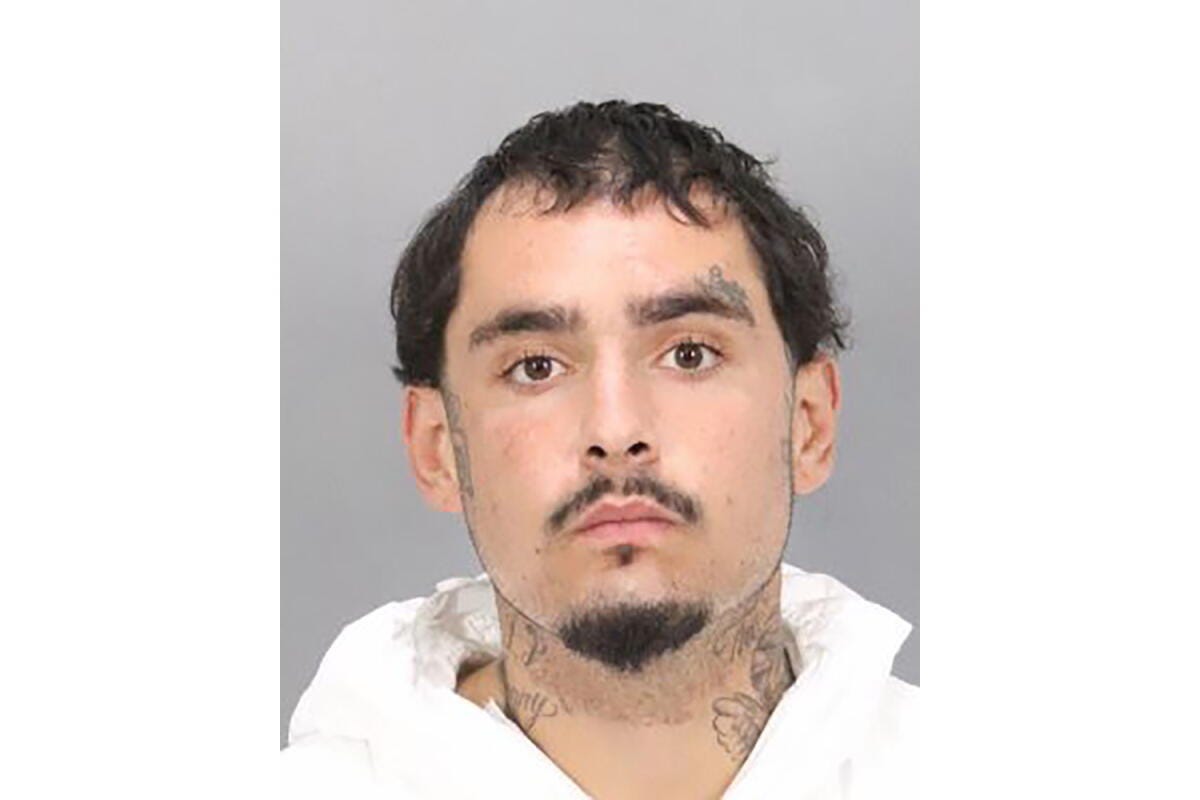
28-year-old Marcelino Castro
Castro said he had buried the man’s body in a creek across from the Tamien Caltrain station. Officers put Castro in a car and drove him there. Near Lelong Street, Castro led them through an opening in a wire fence and down toward the Guadalupe River. Just off a trail below the roadway, he showed them a shallow grave. The officers began digging. They found a man’s body. His throat had been cut.
Then Castro told them there was another one.
The second body was about three miles north, near Coleman Avenue and Autumn Parkway. Castro led police there too. In tall grass near the river, officers found the body of another man wrapped in a red tent.
The first killing, police believe, happened about a week before he turned himself in. Castro knew the first man. He told officers the two of them had gone to the river to smoke meth. According to the police affidavit, “without provocation, he strangled John Doe 1 and slit his throat.” Then, he said, he buried him.
Prosecutors say the second man was a stranger. “Marcelino told us that he lured Victim John Doe 2 to a secluded grassy area near the Guadalupe River to smoke,” detectives wrote. “Once there, he strangled him and struck him with a rock, killing him.” “Castro said he then wrapped the man's body in the red tent and left it in the tall grass.
Castro has been charged with two counts of murder. He has not been convicted, and police have not identified a motive. Deputy District Attorney Michael Gadeberg has said, “I've never seen a case like this, where there's no apparent motive.” He has also offered a possibility. The move from someone Castro knew to a total stranger, he said, “suggests there may not be a conventional motive other than compulsion to kill.”
Compulsion to kill. WeWe'veeard that before, often from sexually motivated serial killers. But what does it mean? And how would we know if it was true?
What the Urge Feels Like
Some killers have tried to explain what the urge feels like. One was a 25-year-old serial killer quoted by forensic psychologist Louis Schlesinger. He described “a sharp pain in the back of my head, an angry, overwhelming feeling to kill.” For decades, Schlesinger has studied sexual murderers, men whose killings have a sexual component. Many had violent fantasies that began in childhood or adolescence. Some described tension or pressure that built up before they attacked someone. Afterward, some reported relief or sexual satisfaction.
Schlesinger calls one pattern in these killings “compulsive homicide.” “It isn't a psychiatric diagnosis. There is no mental disorder called “compulsion to kill.” The idea is that in some (almost always) men, sex and violence become tied together. Violence becomes part of what turns them on. And they feed it, revisiting the same violent fantasies again and again. Consuming violent pornography and developing new fantasies or adding on to old ones. Eventually, for some, imagining it isisn'tnough anymore. They want to do it.
Schlesinger wrote about a 30-year-old former Army drill sergeant he identified only as C.C. He had been convicted of murdering a 25-year-old woman and, in a later attack, a 26-year-old woman and her two children, ages 6 and 8. He said he had killed two other women too, but he was never charged in those deaths.
C.C. dididn'timply wait for an urge to strike. He prepared. He brought along what Schlesinger called a “murder kit.” He read detective magazines and books about forensic investigation. He wanted to know how police solved murders. Before entering a victim's home, he shaved his entire body. He wore sneakers with several socks pulled over them. Afterward, he poured alcohol on his victims' bodies because he believed it would destroy DNA evidence. (It doesn't).
Schlesinger still classified his killings as compulsive. In Schlesinger's view, there's no contradiction. A man can control when, where, and how he kills and still feel driven to kill. Could C.C. control whether he killed at all? Put a police officer at his elbow.
Say C.C. has chosen a victim. He has his murder kit with him. He is outside her door. Then a cop slowly drives by. Does C.C. still kill, knowing he has been seen? Courts and psychiatrists have been asking some version of that question for more than a century. It's called the “policeman at the elbow” test. If a man would hold off with a cop standing right next to him, the reasoning goes, his impulse wasn't irresistible. He had some control.
But real life doesn't come with a police officer at the elbow. Usually all we have is what the killer did. Suppose C.C. could put off killing until tomorrow. Suppose he left when a witness showed up, or passed up one victim because something felt wrong and chose another later. Suppose he went on with his normal life for weeks before he killed. Does any of that prove he could have chosen not to kill at all?
Each time he waited, changed course, or walked away, he stopped himself from killing at that moment. But that still doesn't tell us where the urge went. A man can want something badly and still wait for the right time. He can also fight an urge for days, months, or years and finally give in.
Confessions of a Serial Smoker
I smoked cigarettes for 15 years. It’s something I’m proud of, but it's true. They calmed me down when I was stressed. I enjoyed them. When I was upset or angry, I reached for one. I knew they were bad for me. I had the cough to prove it. On airplanes, I sat in the non-smoking section with the people I was traveling with, then traipsed back to the smoking section every so often to be with the other sinners.
My future husband and I fought about them more times than I can count. I kept smoking anyway. But I didn't smoke in church. I didn't smoke in a movie theater. When I couldn't smoke, I sweated it out and waited. Church was my policeman at the elbow.
I tried to quit and started again. When I finally quit, I felt like I was going to die. I didn't. I quit.
The feeling that I couldn't stop was real. It just wawasn'true.
An urge to smoke is not an urge to kill. But how badly someone wants something tells us about the wanting. It doesn't tell us whether he could stop. So what does it look like when a killer tries to stop himself?
The Killer Who Kept Turning Himself In
In January 1961, 22-year-old Carroll Edward Cole flagged down a police car in Richmond, California. He told the officers he had an urge to rape and strangle women. He wanted help. The officers suggested that he admit himself to a mental hospital. Cole did. On February 2, 1961, he entered Napa State Hospital.
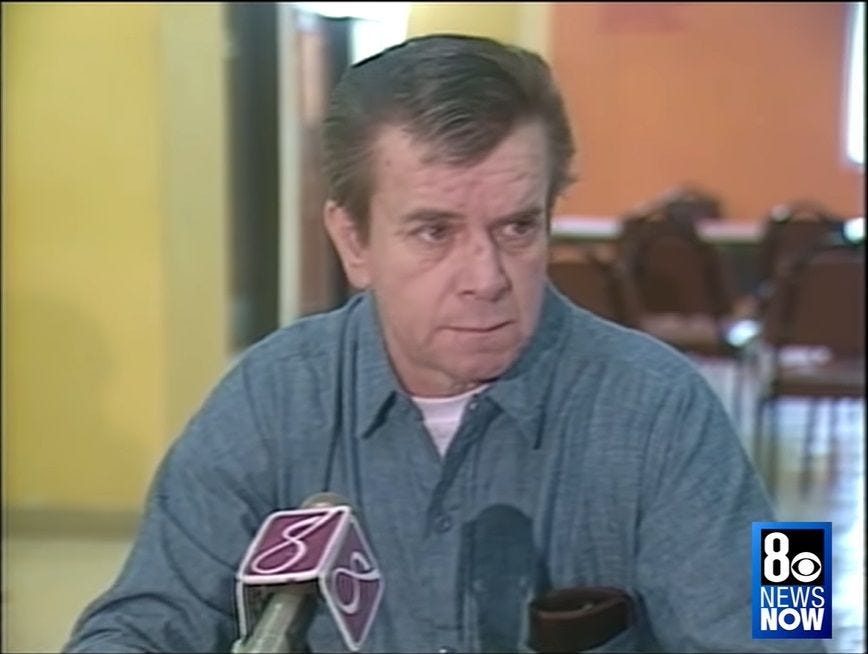
He had already been violent. On June 1, 1960, he approached two couples in a parked car and attacked them with a hammer. He was convicted of assault with a deadly weapon and spent 30 days on a county work farm. Some of the staff thought he might be dangerous. One psychiatrist later wrote that they had considered whether Cole was a “possible sexual psychopath, potentially dangerous to the community.” They released him on March 25, seven weeks later.
Later that year, while in jail for auto theft, Cole asked for psychiatric help again. They eventually sent him to Atascadero State Hospital and then to Stockton State Hospital. At Stockton, psychiatrist I. Weiss wrote that Cole seemed afraid of women. Weiss believed Cole couldn't have sex with a woman while she was alive. He had to kill her first.
Stockton released him anyway, in April 1963. Four years later, in Missouri, he entered the bedroom of an 11-year-old girl while she was sleeping and tried to strangle her. Her screams brought help. Cole pleaded guilty to assault with intent to kill and went to prison.
He was paroled on May 1, 1970. Within months, Cole was in Reno. He tried to strangle two women he met in bars. Fortunately, both survived.
Then, on September 19, 1970, Cole went to the police again. Fifty-six years later, on the same day, Marcelino Castro would flag down an officer in San Jose. Cole told the Reno police about his urge to murder women. Four days later, he was committed to a state hospital.
Psychiatrist Felix Peebles initially described Cole as having a “compulsion to strangle and rape pretty females.” Less than a month later, he saw it differently. Cole, he wrote, was “a highly manipulative young man” who used “his threats of violence upon others to find shelter when he is out of funds.”
“Peebles didn't write down what changed his mind. But he didn't claim Cole had improved, either. His discharge notes read: Condition on discharge: “The same as on admission.” “Prognosis: Poor.”
Then he put Cole on an express bus to Los Angeles, where he was to change buses and go home to San Diego.
Seven months later, Cole strangled a 39-year-old woman named Essie Buck and left her body in the trunk of his car overnight. Before the month was over, he had killed two more women.
Cole was eventually convicted of five murders. He confessed to many more. He refused to appeal his death sentence. “I just messed up my life so bad that I just don't dare to go on,” he told an interviewer the week before his execution. Nevada executed him in 1985.
If a defendant told me he couldn't stop himself, I’d want to know what trying to stop looked like. Who did he tell? Did he ever ask anyone for help? And most important: did he do any of that before he had a murder to explain? Cole did. That doesn't prove he couldn't control himself. But it gives us evidence that, at least sometimes, he tried.
Show me the fight.
The Boy Dahmer Let Go
In February 1992, psychologist Judith Becker took the witness stand in Jeffrey Dahmer's sanity trial. Becker was a defense witness. She believed Dahmer suffered from a mental disorder that drove his crimes. Then the prosecutor asked her about the people Dahmer dididn'till. One was a 15-year-old named Luis Pinet.

Dahmer had met Pinet at a Milwaukee bar and offered him $200 to pose for nude pictures and have sex. The two spent a night together and arranged to meet again. By their second meeting, Dahmer had decided to kill him. Usually, Dahmer drugged his victims with sleeping pills before strangling them. But he had run out. So he bought a rubber mallet.
When Pinet was lying face down, Dahmer struck him in the head. It didn't knock him out. Pinet got angry. The two began to struggle. “Jeffrey says he was not going to be able to win this struggle, and at that point he stopped struggling,” Becker testified.
Pinet left. About 10 minutes later, he came back. He needed money to get home. Dahmer let him inside. Then he attacked him again. This time, Dahmer grabbed Pinet from behind and tried to strangle him. Again, Pinet fought back. And again, Dahmer stopped.
They talked. Dahmer persuaded Pinet to let him tie his hands behind his back. Pinet worked himself free and started to leave again. Dahmer showed him a knife. They kept talking through the night. By morning, Pinet was still alive. Dahmer paid for a taxi to take him home.
Dahmer later said he didn't know why he hadn't killed him. Becker offered one clue. “It didn't work out the way Jeffrey envisioned it would work out in terms of what his fantasies were,” he testified.
Pinet wawasn'the only one. The prosecutor also asked about a 13-year-old boy. Dahmer let him go, she said, because he had to go to work. Dahmer had also told Becker about a man who left the next morning, after Dahmer sobered up and decided he didn't like him as much as he'd thought. Becker acknowledged that Dahmer had enough self-control to let three people go. She still believed he was driven to kill.
A week later, the prosecution's expert, forensic psychiatrist Park Dietz, took the stand. Dietz had interviewed Dahmer for about 18 hours. Dietz testified that when someone walked in, Dahmer didn't kill. When a man he brought home agreed to stay with him for a long stretch, Dahmer didn't kill. “That's an indication that he could control his behavior,” Dietz said.
Then Dietz looked at something Dahmer repeatedly did before a murder. He drank. According to Dietz, Dahmer drank because he didn't like killing. “I never got any thrill in the actual act of strangling,” Dahmer told him. “The killing was a means to an end.”
“H” had to take this additional step to overcome his natural inhibition against the killing,” Dietz testified. “If he had an impulse to kill or a compulsion to kill, he wouldn't have to drink alcohol to overcome it.”
“Under Wisconsin law, self-control was the heart of the case. To keep Dahmer out of prison, his lawyers had to prove that a mental disease left him unable to tell right from wrong, or unable to stop himself. Dietz testified that none of Dahmer's sexual disorders would have left him unable to stop himself from killing.
Not every expert saw it that way. George Palermo, a psychiatrist the judge appointed to represent neither side, told the jury Dahmer was legally sane. But under cross-examination, he said he didn't believe Dahmer could have used sheer willpower to stop himself from killing.
The jury found Dahmer sane, and he went to prison for life.
The Serial Killer Who Never Was
“Tonight if it doesn't rain, I’m going for a walk, and I’m killing someone. It is the only thing that will make me feel better.”
“The man who wrote that was 27. The clinicians who later published his case called him Mr. X. His journal was filled with homicidal fantasies. He imagined killing friends and acquaintances. He imagined torturing and killing strangers and burning their homes. He also imagined killing whoever happened to cross his path.
He had a list. Seventeen names. His mother was on it. He had a knife. He had what a forensic psychiatrist later described as a “specific homicidal plan.” And he thought he was losing control.
In his journal, he wrote about what would happen next. "I'll be leaving here soon. So will begin my career as a serial killer.” “My knives quiver with joy at being near me again. I want to kill until there are no more.”
But as he was deciding to ask for help, Mr. X wrote this: “Today I’m going to sign myself in to a mental ward. What I need them to do is to help me get rid of this pain and this mental block. I will never be part of their society. I want to kill so bad, I’m in pain.” And he went.
He was later moved, under a temporary detention order, to a state psychiatric hospital. Not long after he arrived, Mr. X said the homicidal thoughts had stopped. His doctors had reason to doubt him.
During a brief hospital stay before he got there, Mr. X had written that he planned to fool the staff into thinking he had improved. He would convince them he was normal, get himself released, and then start killing. Now he was telling another group of clinicians that he no longer wanted to kill anyone. And for several months, he wouldn’t let them read his journal.
His doctors worked on what happened when he felt rejected or abandoned. He got angry. The anger turned into rage. And the rage fed fantasies of killing. Mr. X still got angry in the hospital. But he didn’t attack anyone.
After several months, Mr. X finally allowed the staff to read his journal. He hadn’t filled it with cheerful declarations about how well he was doing. He wrote about depression. Discouragement. Distrust of the staff. His fear that the homicidal thoughts would come back. But there was nothing more about killing anyone.
There were games, though. He had invented fantasy role-playing games and written them out in the journal. Some were violent. Some featured half-human creatures with special powers, much like the Windigo, the nonhuman creature he had once believed he was becoming. He said the games were just fantasy.
He considered writing a letter of apology to someone he had once wanted to kill. His clinicians believed his remorse was genuine. He had improved a great deal in his first few weeks. They kept him for eight months. Then they slowly let him out, first for visits to a group home, then for good.
He was required to continue mental-health and substance-abuse treatment, take his medication, submit to drug testing, and not own or carry weapons. A social worker warned all 17 people who had once been on his hit list.
Four months after his release, he was still living at the group home. No violence. No drugs. He said he no longer thought about becoming a serial killer. He had even spent time with one of the people who had once been on his list.
His mother.
At the state hospital, a forensic psychiatrist had rated him at moderate to high risk for violence. Mr. X himself believed that, without hospitalization, he would have killed the people on his list. His doctors believed treatment probably prevented violence. Maybe it did. We can’t know what Mr. X would have done if he hadn’t walked into that hospital.
If Mr. X had killed someone, this is what investigators would have found afterward. The hit list. The knife. The plan. The obsessive fantasies. The statement that he was losing control.
“I want to kill so bad, I’m in pain.”
Looking back, we would see a straight line to murder. But Mr. X didn’t murder anyone. He asked for help.
How to Test “I Couldn’t Stop”
Suppose a man who has killed several people says he couldn’t stop himself. How would we know if that’s true?
Show me the drive.
Was there evidence that he wanted to kill before he had a murder to explain? Did he write about it? Tell anyone? Did he begin preparing to do what he had been imagining? What a man says after his arrest may be true. But what he said and did before the murder wasn’t shaped by the need to explain it. A decade before he began killing women, Carroll Cole told police he had an urge to rape and strangle them. Mr. X filled page after page of a journal with homicidal thoughts.
Show me the fight.
If someone says he couldn’t stop himself, what happened when he tried? Did he ask for help? Did he get rid of a weapon? Did he put himself somewhere he couldn’t act? Cole flagged down a police car. Mr. X admitted himself to a psychiatric hospital.
Show me the times he stopped.
We know who died. Who didn’t? What happened? Did someone walk in? Did the victim fight back? Did he lose interest? Did he have somewhere else to be?
Mr. X’s journal had everything we would expect to find after a murder. There just wasn’t a murder.
That doesn’t mean someone else with urges like his would make the same choice. But it does mean we can’t point to the killing itself as proof that a killer couldn’t stop. Otherwise, we’re going in circles:
He kept killing because he had a compulsion to kill.
How do we know? Because he kept killing.
Is the compulsion to kill real? It can be. What’s hard to prove is that it can’t be resisted. “I couldn’t stop” is a bigger claim than “I wanted to, badly.” It’s also a bigger claim than “I didn’t stop.”
So when someone says he couldn’t stop himself, the question is: what’s the evidence?
When “I Couldn’t Stop” Goes to Court
Sometimes that question ends up in a courtroom. There’s no single rule for what happens when mental illness affects someone’s ability to control himself. It depends on the State. California, where Castro is charged, has no “irresistible impulse” defense. A defendant there is legally insane only if, because of a mental illness or defect, he couldn’t understand what he was doing or couldn’t tell right from wrong. The inability to control an impulse isn’t enough.
When it comes to excuses for criminal behavior, I’ve heard hundreds. One inmate told me he shot his wife in the face because it was the only way to get her to stop talking. Every excuse puts the control somewhere else. On the victim. On the drugs. On the urge. Of all of them, “I couldn't stop myself” is the hardest to dismiss. It sounds like what people say about an addiction. It sounds like a symptom, not a choice.
My job is to separate what a defendant says from what the evidence shows. A prosecutor shouldn’t assume that planning a crime proves there was no powerful drive. C.C. planned, prepared, and took elaborate precautions, and Schlesinger still considered his killings compulsive. A defense expert shouldn’t assume that killing again and again proves the drive was irresistible.
Show me the drive.
Show me the fight.
Show me the times he stopped.
Then compare them. What happened when he killed? What happened when he didn’t? What changed? Those answers don’t decide whether a defendant is legally responsible. That’s a question for the court. They separate evidence that a man wanted to kill from evidence that he couldn’t resist.
What We Still Don’t Know About Marcelino Castro
Gadeberg suggested Castro might have been driven by a “compulsion to kill.” He also described a man who planned. “To have someone to plan out a murder, to lure someone that they know to a secluded location, to take their life, to take the opportunity to cool off and reflect and evade detection and then go on and take another life ... at random,” he said. C.C. planned, too.
How would we test that? Start before the first alleged murder. What had Castro been searching for online? Had he written about killing anyone? Told anyone he wanted to?
Here’s some of what we know. A man who knew Castro told the Mercury News that he was unhoused and sometimes lived in encampments near where the bodies were found. Court records show he had at least six felony convictions, most of them for theft, including car theft.
At one point, he was being seen in the county’s mental health court. What brought him there? What did his treatment records say, if anything, about violence?
According to prosecutors, the first victim was someone Castro knew. The second was a stranger. The killings were several days apart. What did Castro do in between? Gadeberg has said Castro spent those days “reflecting and planning” and then “searched for another victim.” What evidence shows that? Police say Castro lured both men by offering to smoke meth with them. If Castro killed them, we don’t yet know whether he tried to resist.
When the deputies at the county jail didn’t believe him, Castro didn’t quit. He walked over to the San Jose Police Department, flagged down an officer, and confessed. Fifty-six years earlier, Carroll Cole’s doctor had stopped believing him too.
None of that tells us why Castro surrendered. What happened right before he decided to turn himself in? What did he say at the jail? His phone, location history, surveillance video, and witnesses may answer some of those questions.
And then there are the people who didn’t die. Who else did Castro see during those days? Did he approach other people without harming them? If so, why not? And did anyone else die? “I wouldn’t rule out the possibility that there’s another victim,” Gadeberg said.
What we do know is that Castro went looking for the police and turned himself in. Gadeberg thinks that came just in time. Another day or two, he said, and there might have been another killing.
Carroll Cole spent almost ten years asking people to stop him. Marcelino Castro asked twice.
The second time, someone did.
As always, thank you for reading this issue of The Mind Detective. If you enjoyed it, please pass it along to a true crime friend. See you next week!
References
ABC7 News. (2026, September 22). San Jose man arrested after confessing to 2 separate murders; bodies found near Guadalupe River, SJPD says. https://abc7news.com/post/san-jose-man-arrested-confessing-2-separate-murders-bodies-found-guadalupe-river-sjpd-says/19858560/
Associated Press. (1992, February 6). Psychiatrist calls Dahmer a sane killer; lust, power cited as motivating him. The Washington Post.
Cal. Penal Code § 25(b).
Castañeda, C. E. (2026, September 23). Prosecutors detail timeline involving San Jose double murder suspect: “Never seen a case like this.” CBS San Francisco. https://www.cbsnews.com/sanfrancisco/news/san-jose-double-murder-suspect-turns-self-in/
Chan, X. L. S., Lai, S. M., bin Hamdan, D. A., Ng, Y. B., Yim, O. S., & Syn, C. K. C. (2024). Long-term tissue preservation at ambient temperature for post-mass fatality incident DNA-based victim identification. Genes, 15(3), 373. https://doi.org/10.3390/genes15030373
Cole v. State, 101 Nev. 585, 707 P.2d 545 (1985).
Dahmer’s use of condoms cited as proof of control. (1992, February 14). The Washington Post.
Defense witness concedes Dahmer had some control. (1992, February 5). The Washington Post.
Deseret News. (1992, February 5). Psychologist says Dahmer freed 1 teen. https://www.deseret.com/1992/2/5/18966085/psychologist-says-dahmer-freed-1-teen/
Freed, D. (1985, December 7). Nevada executes killer of five; 25 view death of Carroll E. Cole by lethal injection. Los Angeles Times, Part 1, p. 38.
Grissom, J. (2026, September 26). Start of a serial killer? California man confesses twice to Guadalupe River murders. Tampa Free Press.
Keiger, D. (1994, November). The dark world of Park Dietz. Johns Hopkins Magazine. https://pages.jh.edu/jhumag/1194web/dietz.html
Lin, S. (2026, September 27). Police say man confessed to killings, led officers to bodies. Los Angeles Times, B1.
Masters, B. (1993). The shrine of Jeffrey Dahmer. Hodder & Stoughton.
Moran, J. (2026, September 24). Man who allegedly confessed to killing 2 people in San Jose appears in court. NBC Bay Area. https://www.nbcbayarea.com/news/local/man-accused-of-killings-in-court/4148419/
Newton, M. (n.d.). Carroll Edward Cole. Crime Library.
People v. Drew, 22 Cal. 3d 333, 149 Cal. Rptr. 275, 583 P.2d 1318 (1978).
People v. Hubert, 119 Cal. 216, 51 P. 329 (1897).
People v. Jackson, 627 N.W.2d 11 (Mich. Ct. App. 2001).
People v. Skinner, 39 Cal. 3d 765, 217 Cal. Rptr—685, 704 P.2d 752 (1985).
Reisner, A. D., McGee, M., & Noffsinger, S. G. (2003). The inpatient evaluation and treatment of a self-professed budding serial killer. International Journal of Offender Therapy and Comparative Criminology, 47(1), 58–70. https://doi.org/10.1177/0306624X02239275
Richmond, J., Dalton, A., & Clement, L. (n.d.). Carroll Edward Cole “Eddie” [Serial killer timeline]. Department of Psychology, Radford University. https://maamodt.asp.radford.edu/Psyc%20405/serial%20killers/Cole,%20Carroll%20-%202005.pdf
Salonga, R. (2026, September 23). Murder charges for San Jose man in Guadalupe River killings. The Mercury News.
Sayre, M. (2026, September 24). San Jose suspect in Guadalupe River killings appears in court after confessing. KTVU FOX 2. https://www.ktvu.com/news/san-jose-man-guadalupe-river-killings-court-appearance
Schlesinger, L. B. (2000). Serial homicide: Sadism, fantasy, and a compulsion to kill. In L. B. Schlesinger (Ed.), Serial offenders: Current thought, recent findings (pp. 3–22). CRC Press.
Schlesinger, L. B. (2007). Sexual homicide: Differentiating catathymic and compulsive murders. Aggression and Violent Behavior, 12(2), 242–256. https://doi.org/10.1016/j.avb.2006.09.007
Smith, J. (1992, February 5). Dahmer, one of 15 documented cases. UPI. https://www.upi.com/Archives/1992/02/05/Dahmer-one-of-15-documented-cases/7284697266000/
Smith, J. (1992, February 12). Psychiatrist says Dahmer needed alcohol before he could kill. UPI. https://www.upi.com/Archives/1992/02/12/Psychiatrist-says-Dahmer-needed-alcohol-before-he-could-kill/1669697870800/
Smith, J. (1992, February 15). Jury finds Dahmer sane. UPI. https://www.upi.com/Archives/1992/02/15/Jury-finds-Dahmer-sane/6349698130000/
Weiss, K. J. (2023). Red mist and the irresistible defense of “losing it.” Journal of the American Academy of Psychiatry and the Law, 51(3), 431–435. https://doi.org/10.29158/JAAPL.230054-23
Williams, M. (1992, February 5). Police missed hole in head of Dahmer victim, jury told. The Seattle Times. https://archive.seattletimes.com/archive/19920205/1474004/police-missed-hole-in-head-of-dahmer-victim-jury-told
The Mr. X case is the one that stayed with me — seventeen names in a journal, a knife, a plan, and no murder, because he asked for help. It makes the whole 'show me the fight' test feel very alive. But I kept wondering how courts handle the mirror image: when a defendant shows up with a prepared 'murder kit' but no victims, does the justice system read preparation as evidence of self-control, or as proof of intent? The same facts seem to cut both ways, which is exactly what makes 'I couldn't stop myself' so hard to test fairly.